
You are cruising down the road, and you notice it. A low hum or drone that was not there before. It might rise and fall with your speed, change when you turn, or fade away when you let off the gas. Humming noises are easy to ignore because the car still drives, but they are the car’s way of telling you something is wearing out. Sometimes the cause is minor, like an uneven tire, and sometimes it is a wheel bearing or another part that affects safety. This guide explains the most common reasons a car hums while driving, how to narrow down the source, which clues matter, and when to get it checked. If you are hearing a humming noise in Wichita, this will help you describe what you are hearing and decide what to do next.
Why Noises Matter
Cars are built to run quietly, and a new sound is almost always a sign of a change. A hum is usually caused by rotating parts, such as tires, wheel bearings, gears, or belts, that are wearing, loose, or out of balance. The sound may start faint and grow as the problem gets worse. Catching it early usually means a simpler repair, while waiting can mean damage to nearby parts and, in some cases, a safety risk. Paying attention to when the noise happens is the most useful thing you can do.
Start With These Questions
Before you think about specific parts, ask yourself a few things. A technician will ask them too, and the answers narrow down the cause quickly.
- Does the hum change with vehicle speed, or with engine speed?
- Does it get louder or quieter when you turn left or right?
- Does it happen when you accelerate, when you coast, or both?
- Does it go away at certain speeds?
- Does it change on different road surfaces, such as smooth pavement versus rough pavement?
- Is it coming from the front, the back, one side, or under the seats?
- Did it start suddenly, or has it grown over time?
- Did it begin after a tire change, a repair, or hitting a pothole or curb?
Cause One: A Worn Wheel Bearing
A worn wheel bearing is one of the best known causes of a humming or droning noise. The bearings let each wheel spin smoothly on its axle, and when one wears out, it can make a hum, growl, or roar that rises with vehicle speed. A classic clue is a change when you turn. If the noise gets louder when you steer in one direction and quieter in the other, the bearing on the side taking more load may be the culprit. Other symptoms can include a vibration in the steering wheel or floor, a loose feeling in the wheel, uneven tire wear, and in advanced cases, a warning light for the anti lock brakes on some vehicles. A failing bearing should not be ignored, since a badly worn one can lead to a loose wheel and loss of control. If you suspect a wheel bearing, have it inspected promptly and avoid high speeds in the meantime.
Cause Two: Tire Problems
Tires are the most common source of road noise, and they are the first thing to rule out. A hum can come from:
- Uneven or cupped wear, where the tread wears in patches that create a rhythmic noise
- Feathered edges or wear on one side, often from alignment or suspension problems
- A tire with a flat spot, a bulge, or internal damage
- Tread patterns that are naturally louder, especially on aggressive or worn tires
- Tires that need to be rotated, since noise can develop as wear patterns set in
- Incorrect tire pressure, which can change how the tire hits the road
Check the pressure on all four tires when they are cold, using the number on the label inside the driver’s door jamb or in your owner’s manual, not the number printed on the tire. Run your hand lightly over the tread, looking for uneven patterns, and look for bulges or damage. A tire problem can mimic a bearing noise, so a careful inspection is worthwhile.
Cause Three: Alignment and Suspension Wear
When the wheels are not aligned correctly, or suspension parts are worn, tires can wear unevenly, and that leads to noise. Worn bushings, ball joints, and other parts can also add hums and vibrations. Signs include the car pulling to one side, a crooked steering wheel, uneven tire wear, clunking over bumps, and a bouncy ride. An inspection can tell you whether the noise is caused by the suspension itself or by the tire wear that it created.
Cause Four: Drivetrain and Differential Problems
Gears and joints in the drivetrain can hum when they wear or run low on lubricant. Possible sources include the differential, the transfer case on all wheel and four wheel drive vehicles, the transmission, the driveshaft and its joints, and the axle shafts. These noises often change depending on whether you are accelerating or coasting, and they can sound like a whine or hum that rises and falls with speed. Fluid leaks and low fluid levels can make this worse. Because these parts are expensive to repair once they fail, an early diagnosis is valuable.
Cause Five: Transmission Noise
A hum or whine that follows engine speed and changes as the transmission shifts can point to the transmission itself. Low or old fluid, worn bearings, or a failing pump are among the possibilities. Other signs include delayed or rough shifts, slipping, a burnt smell, or fluid leaks. If you notice these along with the noise, have the transmission checked sooner rather than later.
Cause Six: Power Steering Noise
A hum or whine that changes when you turn the steering wheel can come from the power steering system. Low fluid, a worn pump, or air in the system can cause it, and the noise is often more obvious at low speeds or when parking. Heavy steering often goes along with it. If this sounds like your car, the fluid level and condition are worth checking, and a technician can test the pump.
Cause Seven: Belts, Pulleys, and Accessories
Under the hood, the belt drives several parts, such as the alternator, the power steering pump, the water pump, and the air conditioning compressor. A worn belt, a failing pulley, an idler, or a tensioner can produce a hum, whine, or squeal that follows engine speed, not vehicle speed. A noise that changes when you turn on the air conditioning may point to the compressor or its clutch. Our article on common causes of car AC problems explains the warning signs of an air conditioning system that is struggling.
Cause Eight: Exhaust and Other Sources
A hum or drone, especially at certain speeds or under acceleration, can come from the exhaust system. A loose heat shield, a hole in a pipe or muffler, or a worn mount can cause a drone or rattle. Wind noise from a worn door seal, a roof rack, or a damaged trim piece can also sound like a hum at highway speed. These are usually less serious than bearings or drivetrain problems, but a technician can help sort them out.
How to Tell Whether It Follows Speed or Engine RPM
One of the most helpful tests is to notice whether the hum tracks the speed of the car or the speed of the engine. If the pitch rises and falls with road speed, even when you shift gears or coast, the source is likely something that turns with the wheels, such as a tire, a wheel bearing, or a drivetrain part. If the pitch follows the engine speed regardless of how fast you are going, the source is more likely in the engine bay, such as a belt, a pulley, or an accessory. This simple clue gives a technician a head start, and you can safely check it as a passenger or when it is safe to do so. Never test while distracted.
When a Humming Noise Is Urgent
Some sounds mean you should stop driving and get help. Take it seriously if you notice:
- A hum or roar that is getting louder quickly
- A grinding noise along with vibration in the steering wheel or the floor
- A wheel that feels loose, wobbles, or shakes
- A burning smell from a wheel or the drivetrain
- A warning light that comes on with the noise
- A noise that appears right after a tire change or a repair
- Steering or braking that feels different
If you are not sure, it is safer to have the car inspected before continuing, since problems like a failing wheel bearing can get worse quickly. If the car will not start or limps along after a problem, our guide to the top 10 reasons your car won’t start and how to get back on the road covers other common causes.
What You Can Check Yourself
- Tire pressure on all four tires, when cold
- Tire tread and sidewalls, for uneven wear, bulges, or damage
- Fluid levels in the engine, transmission, and power steering, following your owner’s manual
- Fluid spots under the car
- Whether the noise changes with speed, turning, or acceleration
- Dashboard warning lights
Write down what you notice, including when the noise happens and how it sounds. A short voice memo on your phone can help a technician hear what you hear, as long as it is safe to make.
How a Humming Noise Is Diagnosed
A good diagnosis starts with a conversation and a test drive, then an inspection. A technician will typically ask when the noise happens and how long it has been there. They will listen to the sound under different conditions, inspect the tires for wear patterns, check the wheel bearings for play and noise, look at the suspension and steering parts, check fluid levels and leaks, and inspect the belt, pulleys, and drivetrain. They may lift the vehicle to spin the wheels and listen, or use a listening tool to pinpoint the source. The goal is to find the real cause instead of guessing, so you only pay for the repair you need.
What Repairs Usually Involve
The right fix depends on the cause. Depending on your vehicle, it might involve adjusting tire pressure, rotating or replacing tires, correcting the alignment, replacing a wheel bearing or hub assembly, replacing worn suspension parts, servicing or repairing the differential or transmission, replacing a belt, pulley, or tensioner, or repairing the exhaust. Wheel bearing and hub work can vary a lot by vehicle, since some are pressed in and others are bolted on as an assembly, and a few may need specialized tools or a shop.
Can a Mobile Mechanic Diagnose a Humming Noise?
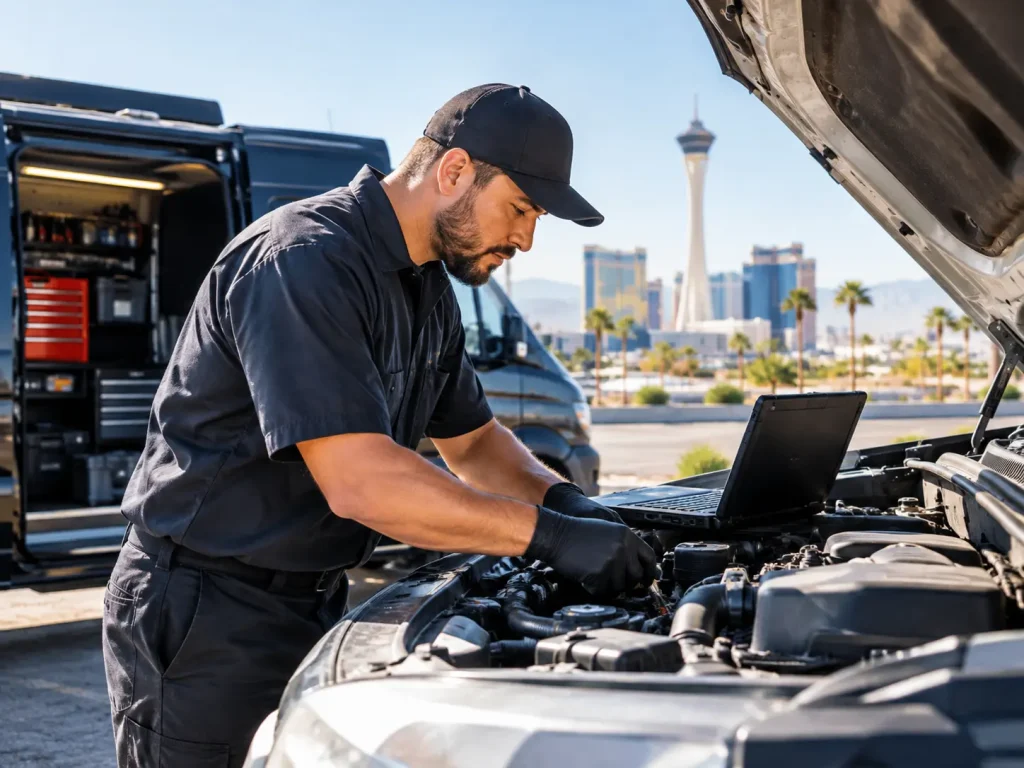
In many cases, yes. A mobile mechanic can come to your home or workplace in the Wichita area, listen to the noise, inspect the tires, wheels, suspension, belts, and fluids, and handle many common repairs on site, such as wheel bearing replacement on many vehicles, belt replacement, and fluid service. Some jobs, such as alignments, tire mounting that needs a machine, pressed in bearings that need a shop press, or repairs that need a lift or specialized equipment, may need a full shop, and a trustworthy technician will tell you honestly when that is the case. When you book, describe when the noise happens, how it changes with speed or turning, and your vehicle’s year, make, model, and mileage.
Do Not Turn Up the Radio
A hum may not seem like a big deal, but it is often the earliest sign of a part that is on its way out. Listening to what the noise is doing, and getting it looked at while it is still quiet, can save you from a bigger repair and keep you safe on the road. If you have noticed a hum while driving, have it checked.
To learn more about our services, visit our homepage. If you would like your car’s noise diagnosed, reach out through our contact us page and we will come to you anywhere in the Wichita area.